
Western Cape Government: Overview
The Western Cape Government works in co-operation with the National Government of South Africa to create laws for and provide services to the people of the Western Cape.
Premier of the Western Cape
Our Premier, Alan Winde, is the executive authority in the Western Cape, mandated by the Constitution to be the head of the Western Cape Government. The Premier also appoints the Provincial Cabinet, who jointly form the executive branch of the Provincial Government. Visit the Premier's page for more information on his work and vision for the province.
The Western Cape Government (WCG) consists of 13 departments, namely:
- Department of Agriculture
- Department of Cultural Affairs and Sport
- Department of Economic Development and Tourism
- Department of Environmental Affairs and Development Planning
- Department of Infrastructure
- Department of Local Government
- Department of Police Oversight and Community Safety
- Department of Social Development
- Department of the Premier
- Provincial Treasury
- Western Cape Education Department
- Western Cape Government Health and Wellness
- Western Cape Mobility Department
Working with a budget of R80.319 billion over the 2023/2024 financial year, these departments are responsible for implementing laws and providing services to the people of the Western Cape.
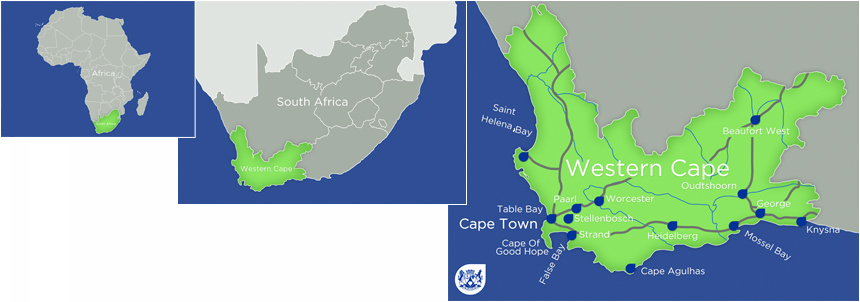
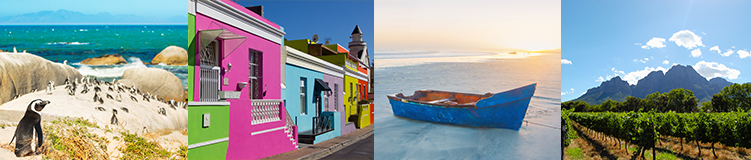
The Western Cape is situated on the southwestern tip of the African continent and is one of the 9 provinces of South Africa. The province is also home to South Africa's oldest city, Cape Town. The Western Cape's natural beauty, complemented by its hospitality, cultural diversity, excellent wine and colourful cuisine, makes the province one of the world's greatest tourist attractions. 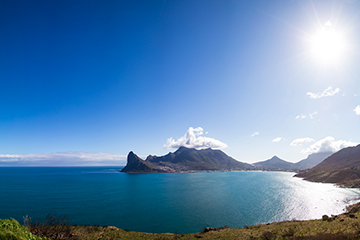
With 11.9% of the national population, more than 7.2 million people live in the Western Cape on 129 370 km² of land (PGWC: Provincial Treasury - Provincial Economic Review & Outlook - PERO 2016). Afrikaans is spoken by the majority, with isiXhosa and English being the other main languages.
In South Africa, the official unemployment rate is estimated at 32.6% in Q2:2023, according to Statistics South Africa (Stats SA).
Between the second quarter of 2022 and the second quarter of 2023, the Western Cape’s official unemployment rate decreased by 6.6% to 20.9%. This is the lowest unemployment rate in the country and substantially lower than any other provinces (Stats SA Quarterly Labour Force Survey (QLFS), Quarter 2: 2023).
Reflecting on jobs in this term of office, the Western Cape economy created almost two thirds (64.9%) of all jobs in South Africa. This shows that good governance, forward thinking government policies and a collaborative government – private sector ecosystem enables opportunities for growth and jobs.
As a government, we must make it as easy as possible for businesses of all kinds to start up, work and grow in our province.
Our Red Tape Reduction unit is tearing up bureaucratic red tape. Over the past 5 years, the unit has helped save the economy R2.4 billion.
While all businesses are being pummeled by load shedding and crime, small businesses often bear the brunt. We must offer support to them in any way we can. Our SMME Booster Fund has since 2019 assisted over 860 SMMEs, sustaining 4 977 jobs. The Booster Fund has helped these SMMEs grow, creating an additional 651 jobs.
Tourism is the linchpin of our economy
Between January and September of 2023, more than 6.8 million two-way international and domestic passengers passed through our award-winning Cape Town International Airport (CTIA), of which 1.9 million were international two-way passengers, and 4.9 million domestic two-way passengers.
International two-way passengers through CTIA between January and September 2023 increased by 60% compared to the same period in 2022, and domestic two-way passengers increased by 14%, compared to the same period in 2022. This is according to the monthly tourism report, compiled by the Western Cape Government’s (WCG) trade, investment, and tourism promotion agency, Wesgro.
The biggest driver of economic growth and job creation in the Province is the services sector. The Western Cape has managed to maintain its significant comparative trade advantage in the agri-processing value chain and several services sectors. Agri-processing and tourism are suitable sectors to support inclusive growth, as both are very labour intensive with rising productivity and allow for the creation of sustained jobs for all skill levels in both urban and rural areas. Both sectors can also be important earners of foreign exchange. The development of the gas sector allows for a transformation of the energy mix in the Western Cape to include more sustainable, affordable and environmentally friendly solutions. 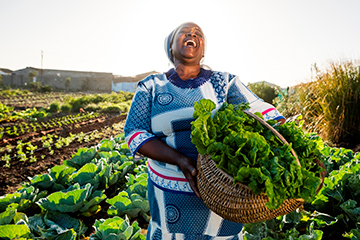
The clothing sector is benefiting from increased demand from local retailers and there are tentative signs of a turnaround in the industry. The construction sector is one of the key sectors to benefit from sustained growth in other sectors as it results in an increased need for infrastructure development. Due to these links to fast-growing sectors, infrastructure and construction growth in the Province is expected to continue to outpace growth in the rest of South Africa.
The National Constitution permits each provincial legislature to adopt a constitution for its province. The Provincial Constitution must correspond with the National Constitution.
The Constitution of the Western Cape was adopted in 1998 and is available in the official languages of the province, Afrikaans, English and Xhosa.
The Western Cape Provincial Parliament is responsible for creating laws for the province within its realm of responsibilities as set out in the Constitution of South Africa. These responsibilities include creating provincial legislation dealing with:
- Environment
- Health services
- Housing
- Language policy
- Nature conservation
- Police services
- Provincial public media
- Public transport
- Regional planning and development
- Agriculture
- Road traffic regulation
- Tourism
- Trade and industrial promotion
- Traditional authorities
- Urban and rural development
- Vehicle licensing
- Welfare services
- Abattoirs
- Ambulance services
- Liquor licences
- Museums other than national museums
- Provincial planning
- Provincial cultural matters
- Provincial recreation and activities
- Provincial roads and traffic
Provincial parliament is housed in Wale Street, Cape Town and consists of 42 members of which:
- 24 seats are currently held by the Democratic Alliance,
- 12 by the African National Congress,
- 2 by the Economic Freedom Fighters,
- 1 by the GOOD party,
- 1 by the African Christian Democratic Party
- 1 by the Freedom Front Plus, and
- 1 by the Al Jama-AH.
 Vision
An open opportunity society for all.
The Western Cape Government will promote freedom and opportunity for all the people of the province through:
- Policies and practices that strengthen the Constitution.
- Creating the conditions for sustainable economic and employment growth.
- Alleviating poverty by providing a welfare safety net for those unable to provide for themselves.
- Ensuring the safety of every person.
- Capital and skills.
- Delivering clean, efficient, cost-effective, transparent and responsive public administration.
- Competence.
- Accountability.
- Integrity.
- Responsiveness.
- Care.
- Innovation.
1. Increase economic empowerment for all the people of the Western Cape.
2. Reduce poverty by promoting opportunities for all.
3. Promote rural development.
4. Efficient and effective infrastructure.
5. Sustainable human settlements.
6. Improve individual and household capacity to respond to opportunity.
7. Improve efficiency and effectiveness in health, education, well-being and safety.
8. Sustainable resource use through greater spatial integration.
9. Effective public and non-motorised transport.
10. Responsive and effective governance.
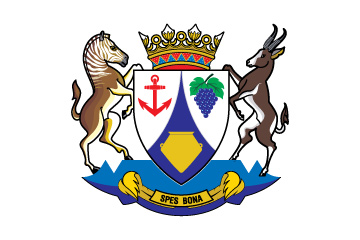 The Provincial Coat of Arms
The coat of arms is the result of several months of research and consultation with important role-players (especially representatives of the political parties represented in the Provincial Parliament). The elements encapsulated in the design were chosen because of their wide support and because they reflect the uniqueness of the Western Cape. The predominant colours, red and gold, have a long association with heraldry in the Province.
The design consists of:
- a shield
- supporters of the shield
- a base
- a coronet
- a motto
Read more about the Western Cape Government coat of arms and what it represents.
WEBSITE: www.westerncape.gov.za
|
We are pleased to share with you that the Western Cape Government (WCG) has once again achieved certification as a Top Employer in 2024. |
||||
 |
Western Cape Government © 2023. All rights reserved.
This project is an initiative of the Western Cape Government. |
 |