Western Cape agriculture team shows its drone and rover work, and a joint working group is formed with AIFOD
Eight years ago a team from the Western Cape Department of Agriculture flew a small drone over a dam wall under construction. Engineers had needed three days to measure 1,500 points by hand. The drone collected three million in 25 minutes.
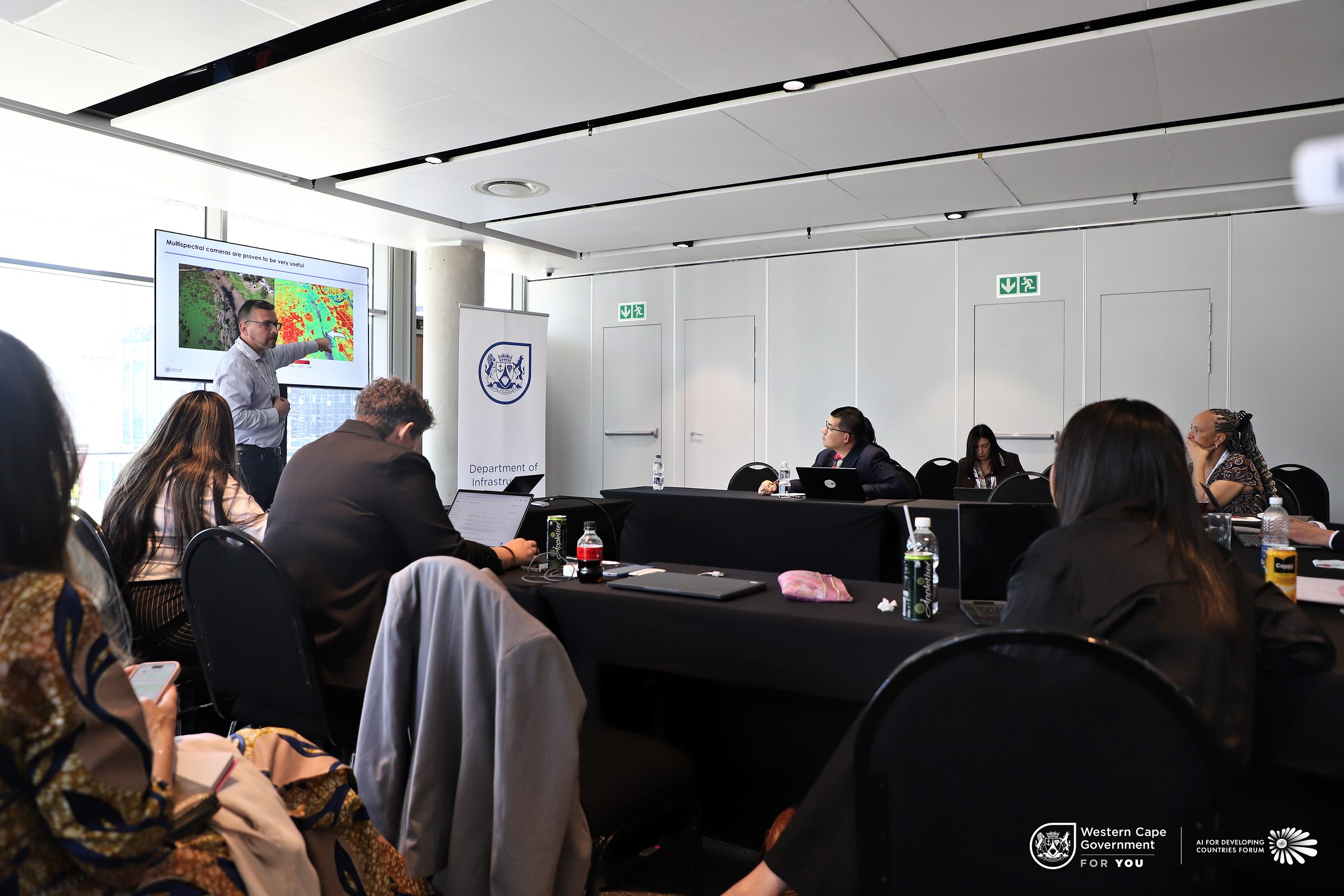
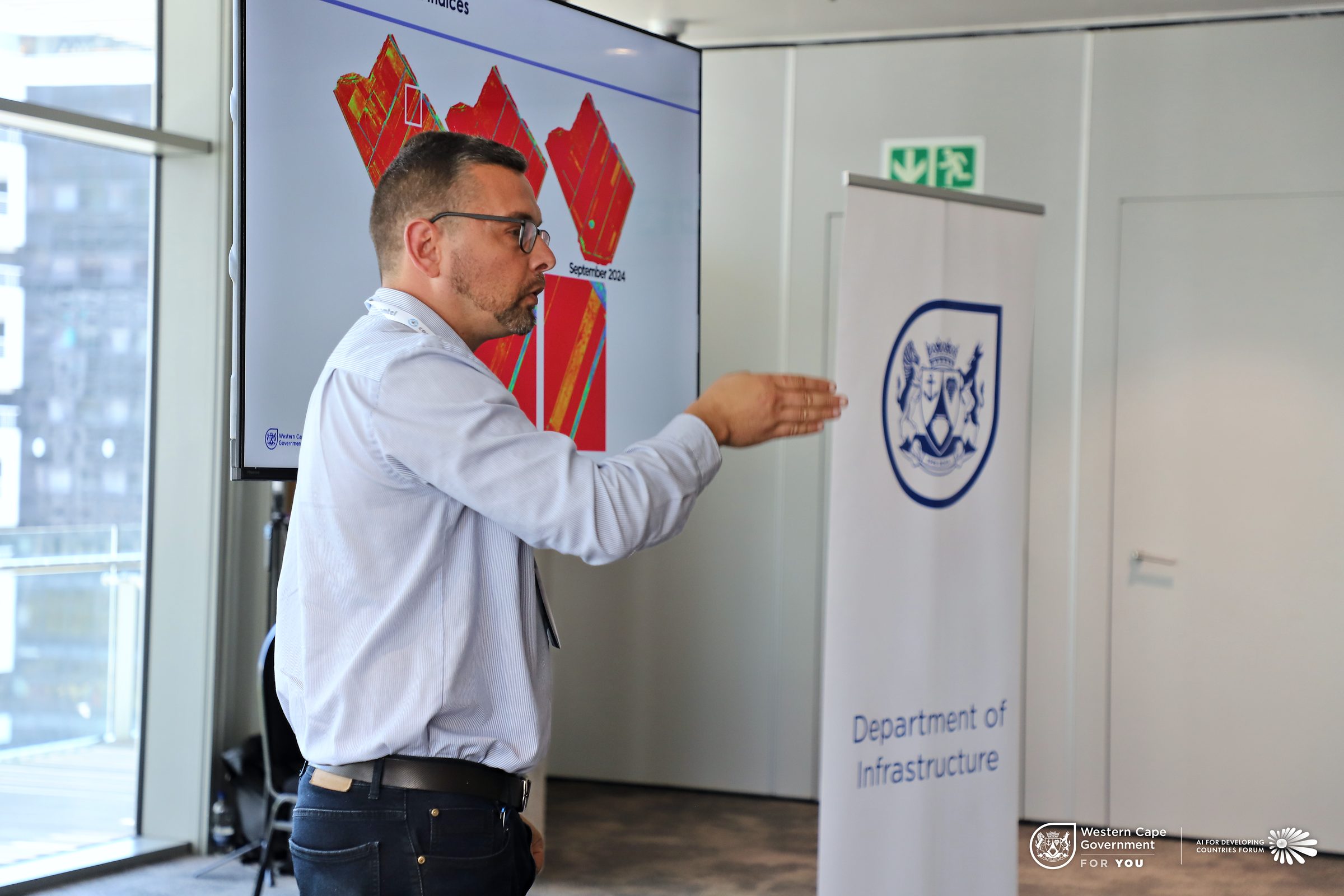
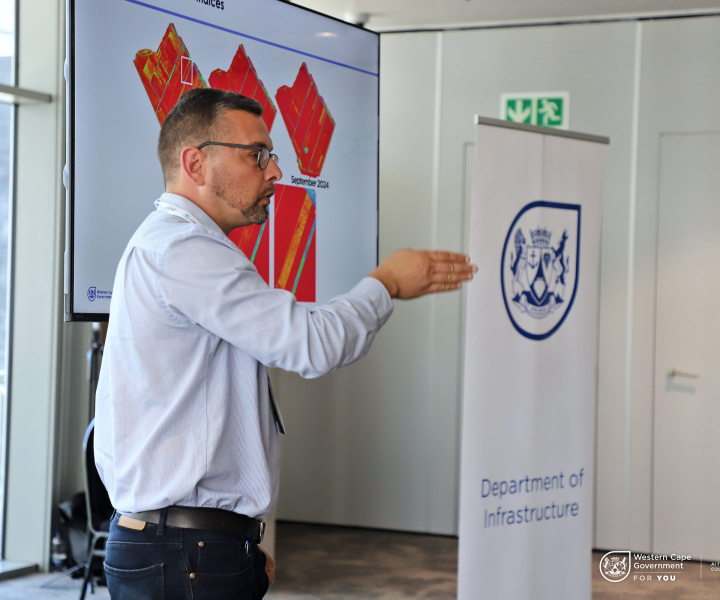
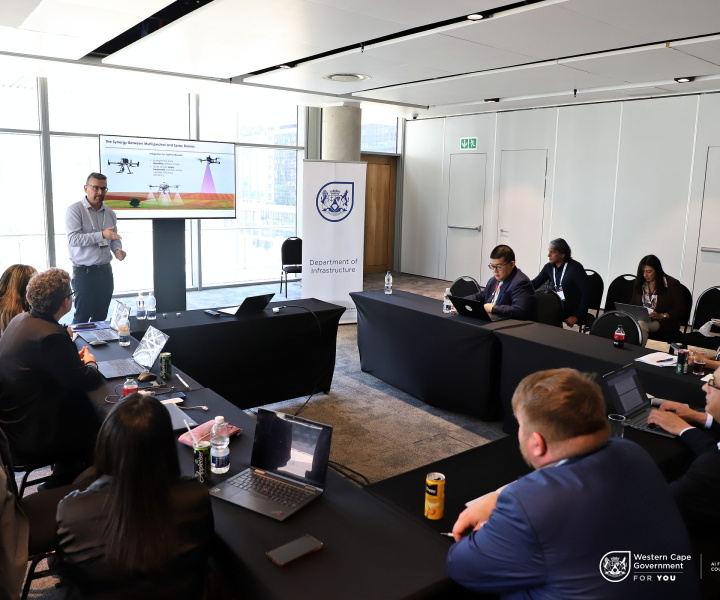
“Our work is now measured in minutes, not in days,” Arie van Ravenswaay told a delegation from the AI for Developing Countries Forum (AIFOD) on Tuesday. He leads the Department’s work on innovation, technology design and transfer, and was presenting at a meeting hosted by the Western Cape Department of Infrastructure (DOI) during Africa Tech Festival.
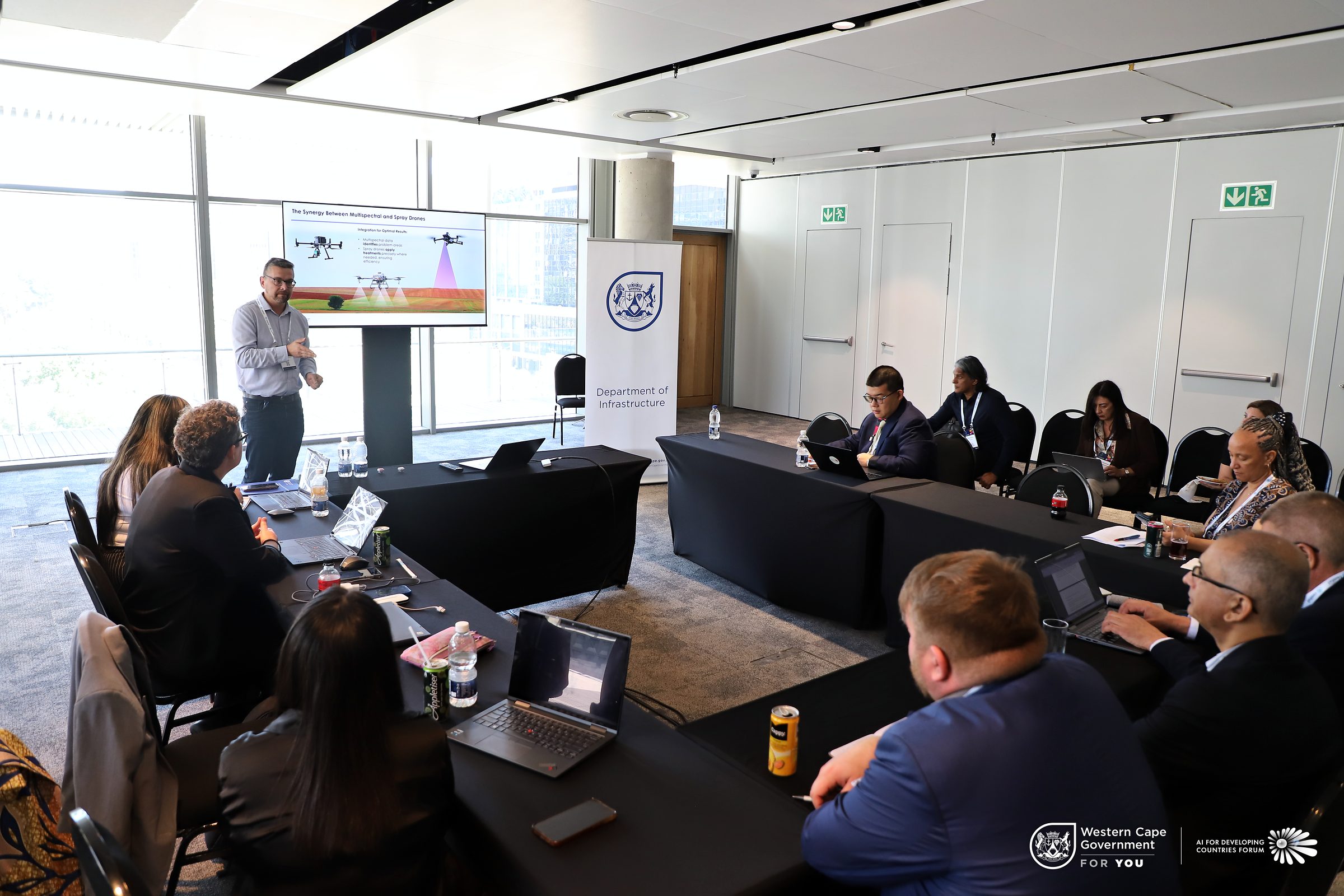
The team now works with three kinds of drone. A multispectral drone surveys crops and detects plant stress before the eye can see it. A spray drone treats only where treatment is needed, using less chemical. A LiDAR drone does engineering surveys. When no suitable software existed to compare images across farms, months and years, he built a platform with the help of AI. In one case, multispectral images helped environmental inspectors trace river pollution to a pipe buried on a hillside.
Because drone regulation in South Africa involves heavy paperwork, the team has also brought the same spraying method down to the ground: an autonomous rover with a 240-litre tank that can be refitted to carry produce. Smallholder farmers in particular like it, he said. “It’s not about taking away jobs,” he added. Nobody should be in a field while chemicals are sprayed, and the tractor driver now stands at the edge of the field and programmes the machine.
The Department does not sell a service. It buys or borrows a technology, tests it on its own research farms, and shows farmers the results so they can decide for themselves. “I don’t want farmers to invest everything into something and it doesn’t work”, Van Ravenswaay said. The province has seven research farms, including what he described as the only ostrich research farm in the world, at Oudtshoorn.
The Head of Department of Infrastructure, Adv. Chantal Smith, who introduced the session, said farmers’ trust in the Department had been built over 30 years, and that it is one of the smaller departments by budget. She asked AIFOD for two things: help with skills and research capacity, and an exchange of knowledge and technology. “If three people do all of this,” she said, “what does it mean if you put 7,500 people behind it?” AIFOD has more than 7,300 members.
Three ideas came out of the discussion. AIFOD Co-Founder Tianze Zhang proposed bringing member companies to the research farms to test their products against benchmarks set by the Department, phased to match the team’s capacity. Adv. Smith saw room for a joint project on data the team has already collected from soil and microclimate sensors and fortnightly multispectral flights; Van Ravenswaay said that understanding diseases such as sclerotinia, which kills canola, would be a big win for farmers. Jeremy Stein of tech reform GmbH proposed documenting the Department’s approach under AIFOD’s FAIR framework so that it can be presented at the AIFOD Summit in Nairobi in February 2027.
Van Ravenswaay said he would like to build models locally on local data. The meeting agreed that he will lead an agriculture working group with AIFOD, and that the proposals will be put in writing.
About AIFOD. The AI for Developing Countries Forum (AIFOD) is a membership organisation working on responsible, people-centred AI for developing countries. It is in Cape Town from 15 to 20 November 2026 on the first visit under its Memorandum of Understanding with the Western Cape Government Department of Infrastructure (DOI).