Western Cape agriculture researchers build their own AI tools, and a working group with AIFOD is next
A researcher at the Western Cape Department of Agriculture had 10,000 data points and no idea where to begin. Half an hour later the researcher had a working dashboard.
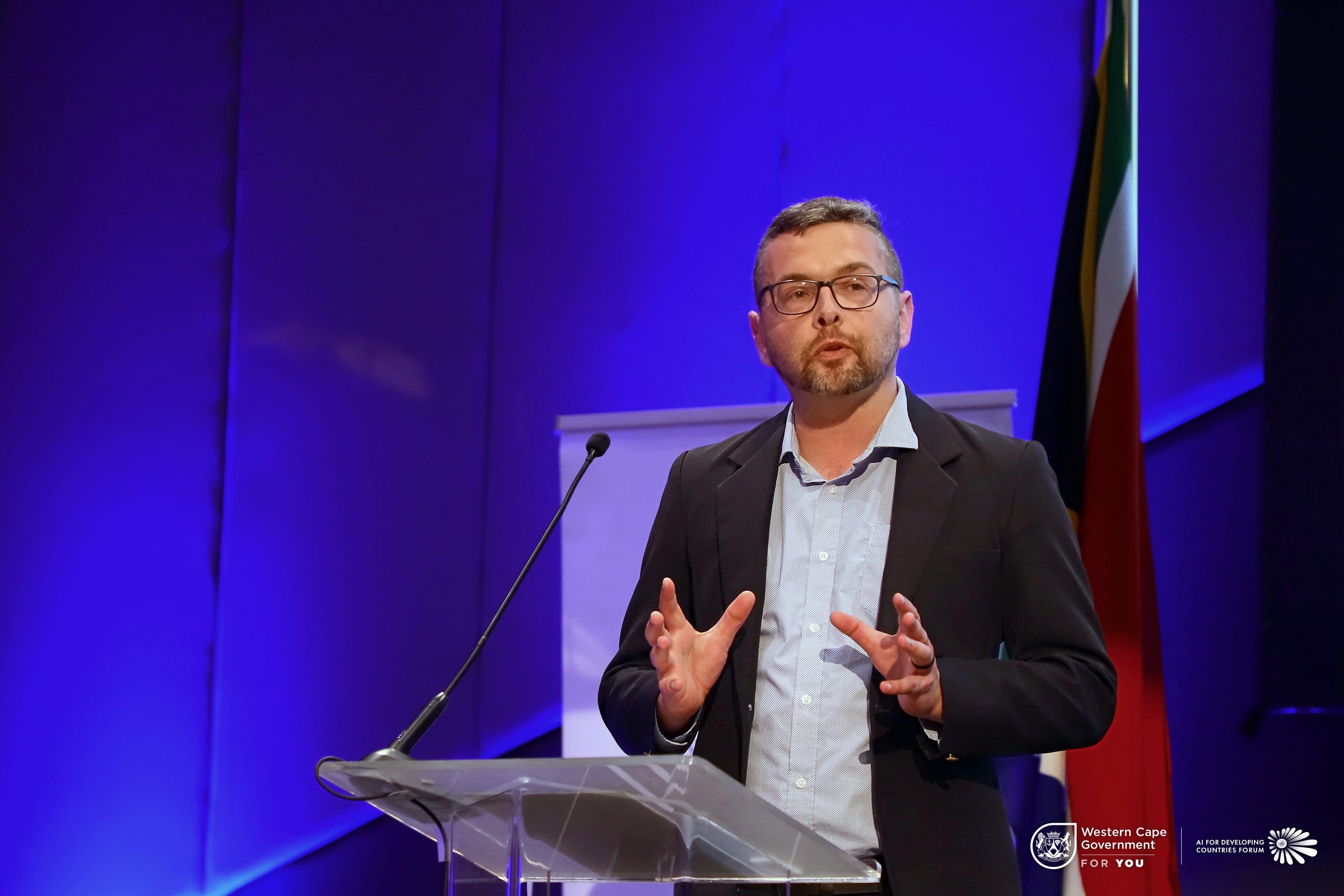
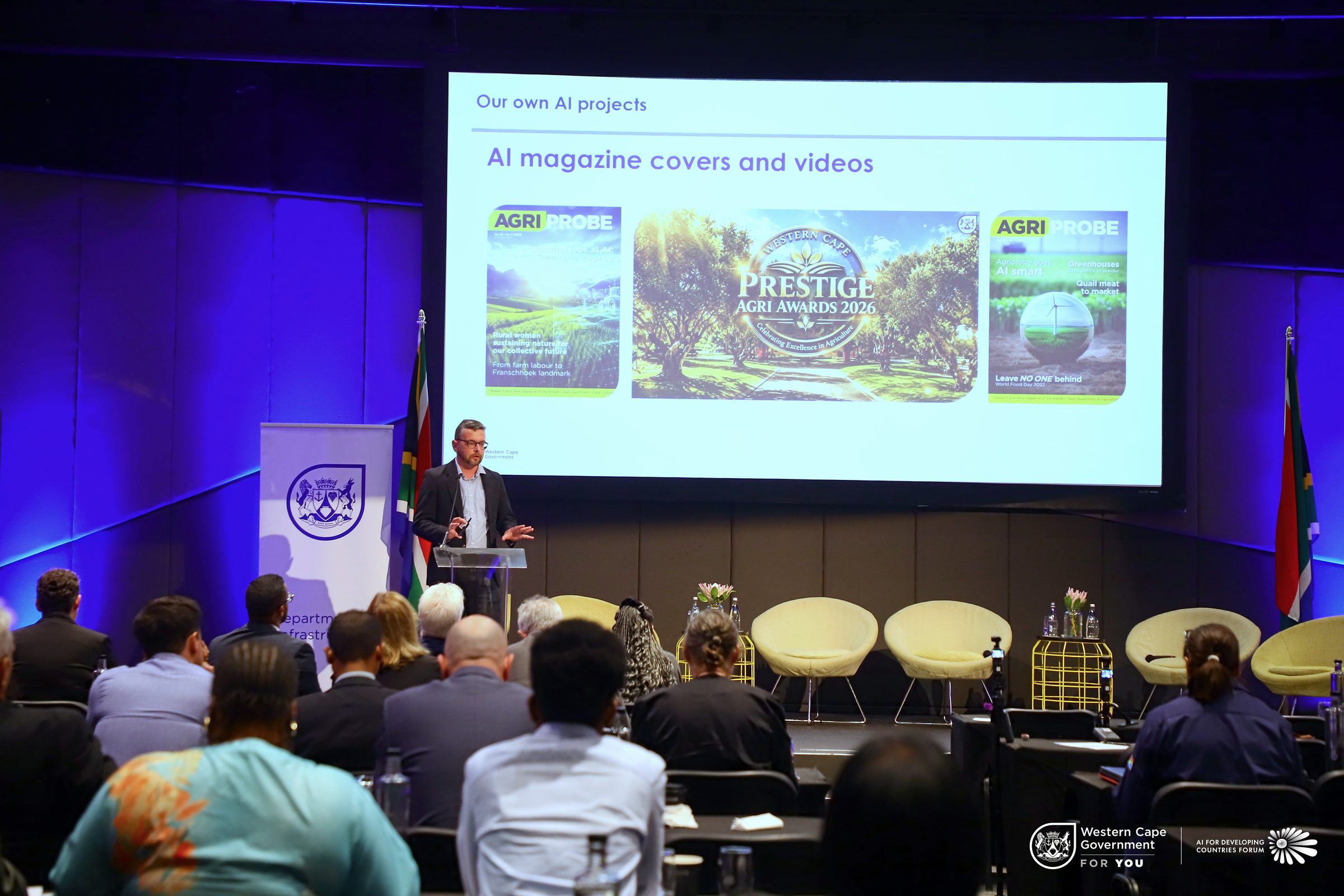
Arie van Ravenswaay, who leads innovation, technology design and transfer in the Department’s research and technology development services, used the example at the WCG DOI–AIFOD jointy co-hosted AI Infrastructure Ministerial Networking Forum on Wednesday to show what a small public-sector team can now build for itself. Writing code with the help of AI, he said, has made the work faster.
His argument was that cloud computing has its place and local computing has its place, and that the demand for local AI is very large. Several of the tools he showed run on the user’s own computer. A meeting recorder and transcriber loads its model into the browser, so the recording never leaves the machine. A retrieval system answers questions only from the Department’s own research papers can explain a finding the way one would explain it to a 17-year-old, which helps close the gap in language between scientists and farmers.
Other tools are plainer and save time. An Android app for counting assets by scanning codes has cut a two-day stock-take to less than one. An online training system records how much of each video a staff member has watched, for audit purposes. Calculators for farmers replace spreadsheets that were hard to follow, and a single system now collects trial data in the same form from every researcher. A reader turns a document in any format into audio.
Some go further. One tool takes ordinary security-camera footage from the ostrich research farm and produces heat maps and movement tracks of the chicks. A dashboard brings together data from drones, inspection robots and field sensors, so that plant stress, yields and trials can be compared. Still in development are a tool that produces minutes locally and live translation for events in the Western Cape’s three official languages, shown on screen as people speak.
Van Ravenswaay also held up a small camera board of the kind that costs very little. His approach is to run small models on such devices in the field and send back only the result, not the raw data. On security, he said automated attacks are beyond what people can fend off by hand, and that an organisation needs AI of its own, on its own premises, to answer them.
The next step, he said, is for AI-assisted decisions to guide farm machinery directly.
Agriculture is the next area in which the Western Cape Government and AIFOD are preparing to work together. On Tuesday the two sides agreed to form an agriculture working group, led by Van Ravenswaay. The ideas on its table include inviting AIFOD member companies to test their products on the Department’s research farms against benchmarks the Department sets, and joint work on the sensor and drone data the team has already collected.
About AIFOD. The AI for Developing Countries Forum (AIFOD) is a membership organisation working on responsible, people-centred AI for developing countries. It is in Cape Town from 15 to 20 November 2026 on the first visit under its Memorandum of Understanding with the Western Cape Government Department of Infrastructure (DOI).