UWC’s CoLab shows how South Africa is defining digital and AI skills, from using a phone to AI engineering
Bring everyone along: UWC’s CoLab shows how South Africa is defining digital and AI skills, from using a phone to AI engineering
Ask ten people what digital skills are and you will get ten answers, which is why South Africa needed one framework that covers everything from using a mobile phone to engineering AI systems, researchers at the University of the Western Cape (UWC) told the Western Cape Government Department of Infrastructure (DOI) and the AI for Developing Countries Forum (AIFOD) on Thursday.
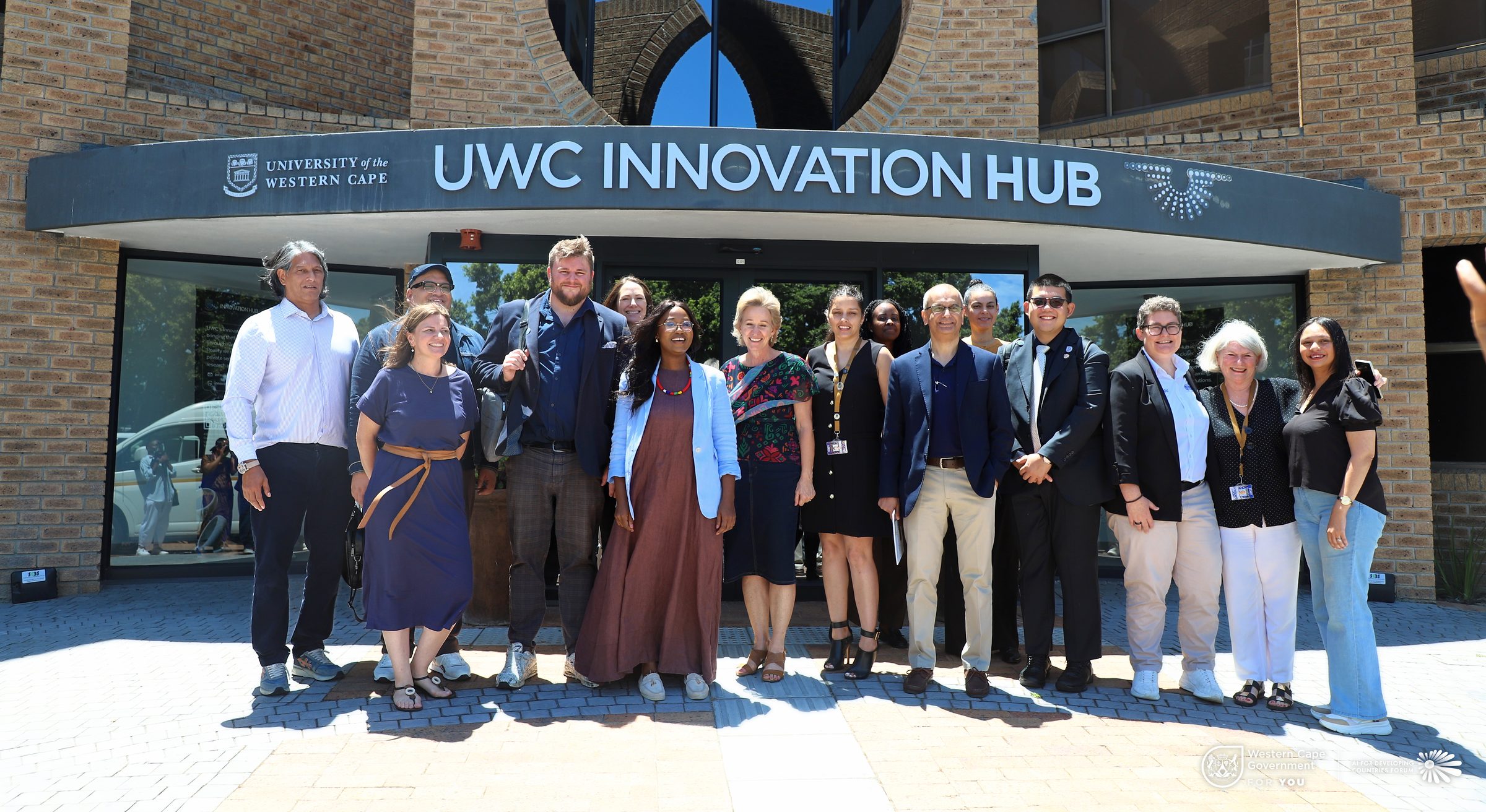
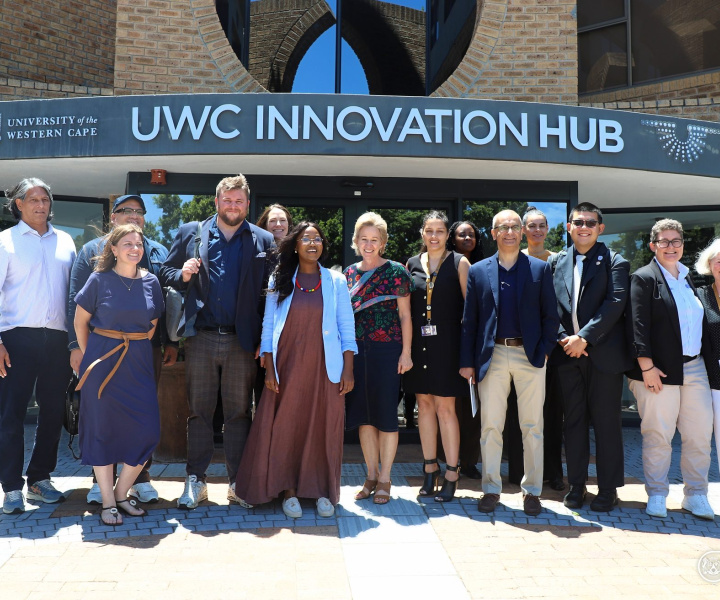
The delegation was received at the UWC Innovation Hub in Parow by the CoLab for Digital Inclusion and Social Innovation. For twelve years, the CoLab has designed interventions, products and frameworks, tested them in practice and fed the results back into research. Its central difficulty, Dr Leona Craffert (CoLab Director) said, is balancing the pursuit of digital inclusion and a just digital transformation with the need to remain competitive, a balance that becomes more complex with the affordances of AI.
The CoLab has spent more than twelve years on the development and refinement of a citizen-centred National Digital Competence Framework. Its structure starts from digital literacy, which everyone needs, and expands to advanced and highly advanced skills required for users in all sectors, digital leadership skills and the skills of technical practitioners. It is built to incorporate existing information and communication technology (ICT) profession or practitioner industry frameworks (e.g. Skills Framework for the Information Age (SFIA)) rather than compete with them and it is also aligned to international standards such as the European Union’s DigComp.
A revision commissioned by the Department of Communications and Digital Technologies (DCDT) adds a competence area for AI and generative AI. The updated framework, with a proposed implementation plan and an assessment tool, has just been submitted to national government for cross-sectoral adoption.
As an implementing partner of the National Electronic Media Institute of South Africa (NEMISA), an entity of DCDT, the CoLab trains citizens in the Western Cape from mobile digital literacy to digital transformation, software development and AI engineering. This partnership has enabled the CoLab to train more than 22,000 people over the past six years, and the results of each course are evaluated and used to improve the next.
Since 2019, the CoLab’s Future Innovation Lab, in partnership with the Samsung Equity Equivalent Investment Programme (EEIP), has trained young people – who could not enter university due to their mathematics and science results and/or a lack of resources to enter higher education institutions – as software developers. One of the key deliverables of the programme is its ability to secure employment for successful candidates through the participation and support of the broader business ecosystem.
Two research projects aim to replace guesswork with evidence. A survey conducted in four provinces, in partnership with Ghent University and Vrije Universiteit Brussel, provides a baseline measure of where South African citizens currently stand on various aspects of digital engagement, including their awareness and perceptions of AI and their use of these technologies. A second project, commissioned by GIZ through its FAIR Forward programme, has produced a framework of eight domains for assessing South Africa’s maturity in AI, developed with academia, industry and professional bodies, to establish a baseline against which future assessments can track progress.
In discussion, AIFOD and the CoLab explored how such a framework could be put to use by companies, universities and government departments. The hosts cautioned against measuring only what is easy to measure and said the question to ask from a South African point of view is always whether everyone is being brought along. Both sides said they would continue the conversation.
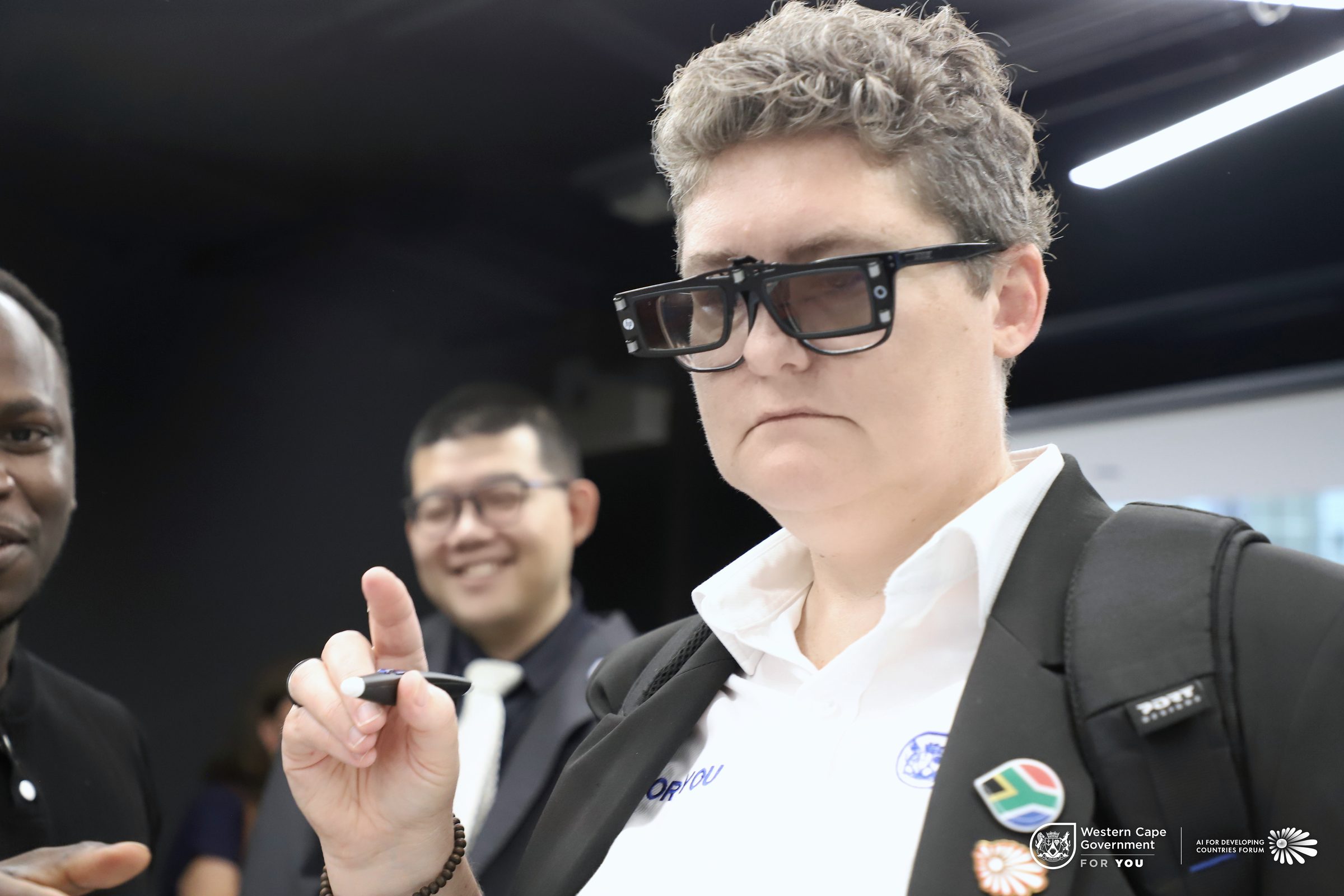
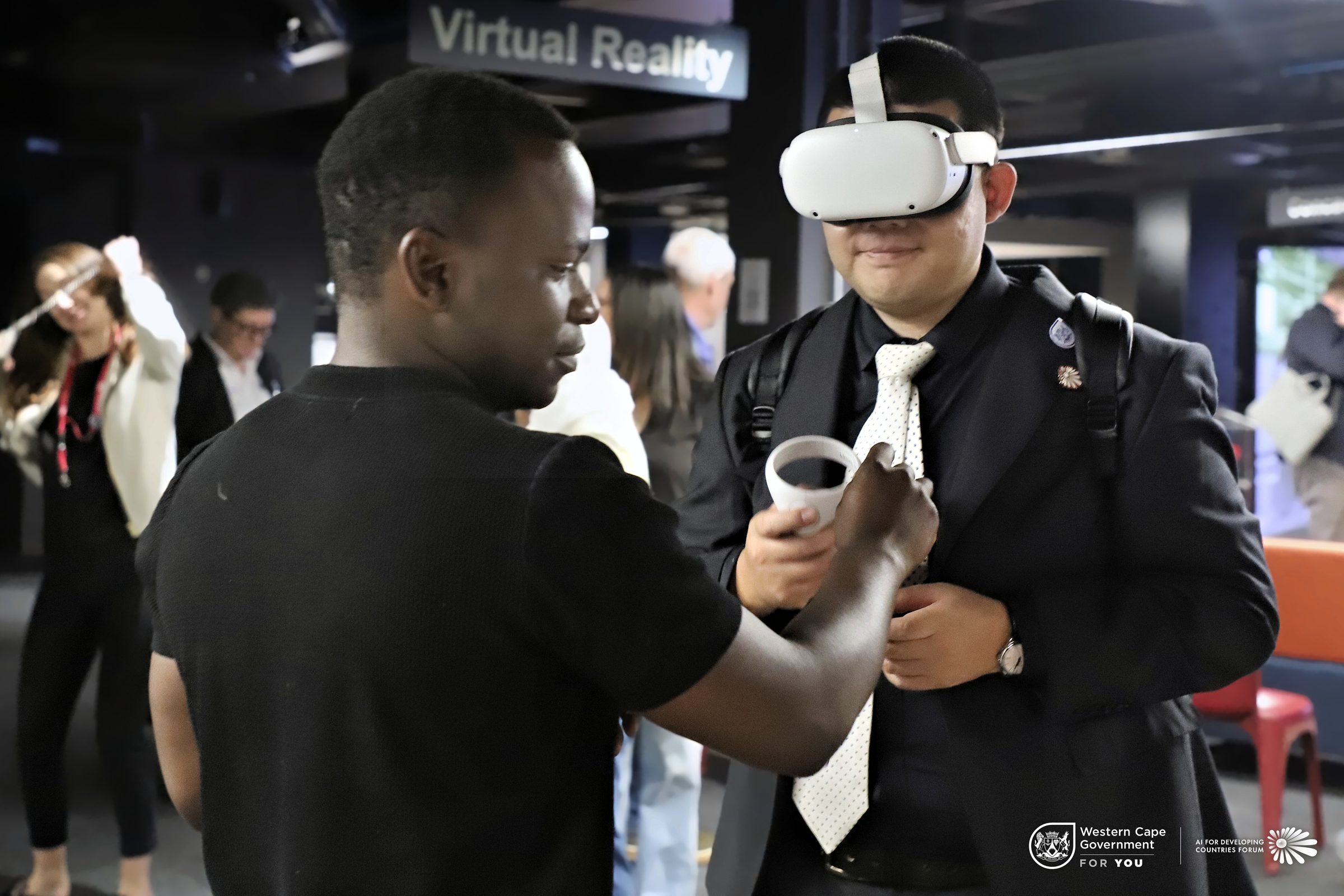
In the Hub’s Immersive Zone, the delegation handled 3D models with a stylus, from a beating heart for medical students to a house built up floor by floor from its plan and tried virtual-reality headsets.
About AIFOD. The AI for Developing Countries Forum (AIFOD) is a membership organisation working on responsible, people-centred AI for developing countries. It is in Cape Town from 15 to 20 November 2026 on the first visit under its Memorandum of Understanding with the Western Cape Government Department of Infrastructure (DOI).