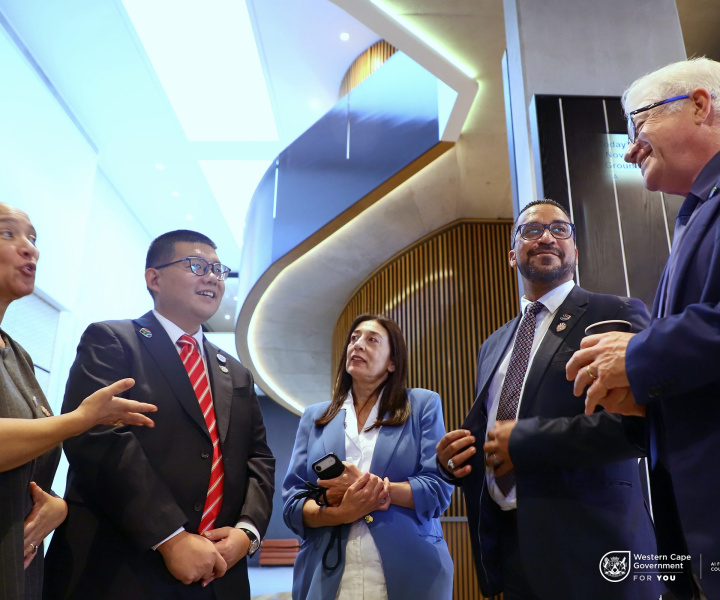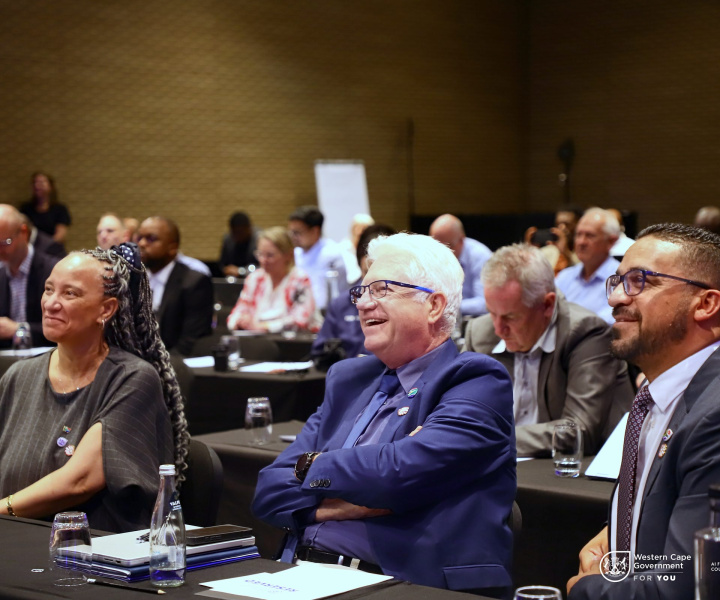
Premier Alan Winde tells AI forum the province chooses opportunity over fear
Artificial intelligence frightens some people, Western Cape Premier Alan Winde said on Wednesday, but to him it means opportunity.
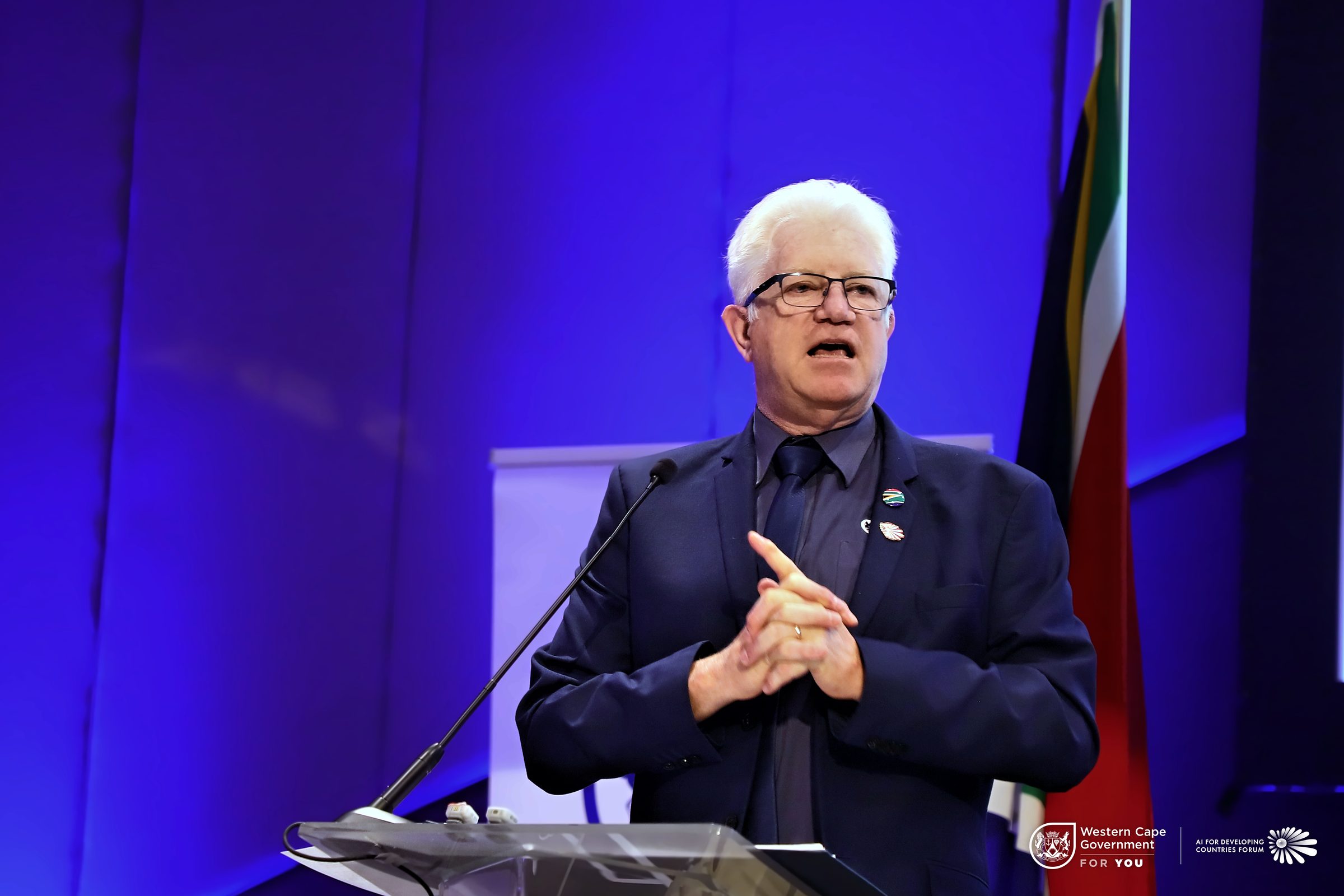
The Premier was giving the keynote address at the WCG DOI–AIFOD co-hosted AI Infrastructure Ministerial Networking Forum. He welcomed delegates to “Silicon Cape” and praised the provincial department that used to be called Public Works for becoming an innovative Department of Infrastructure.
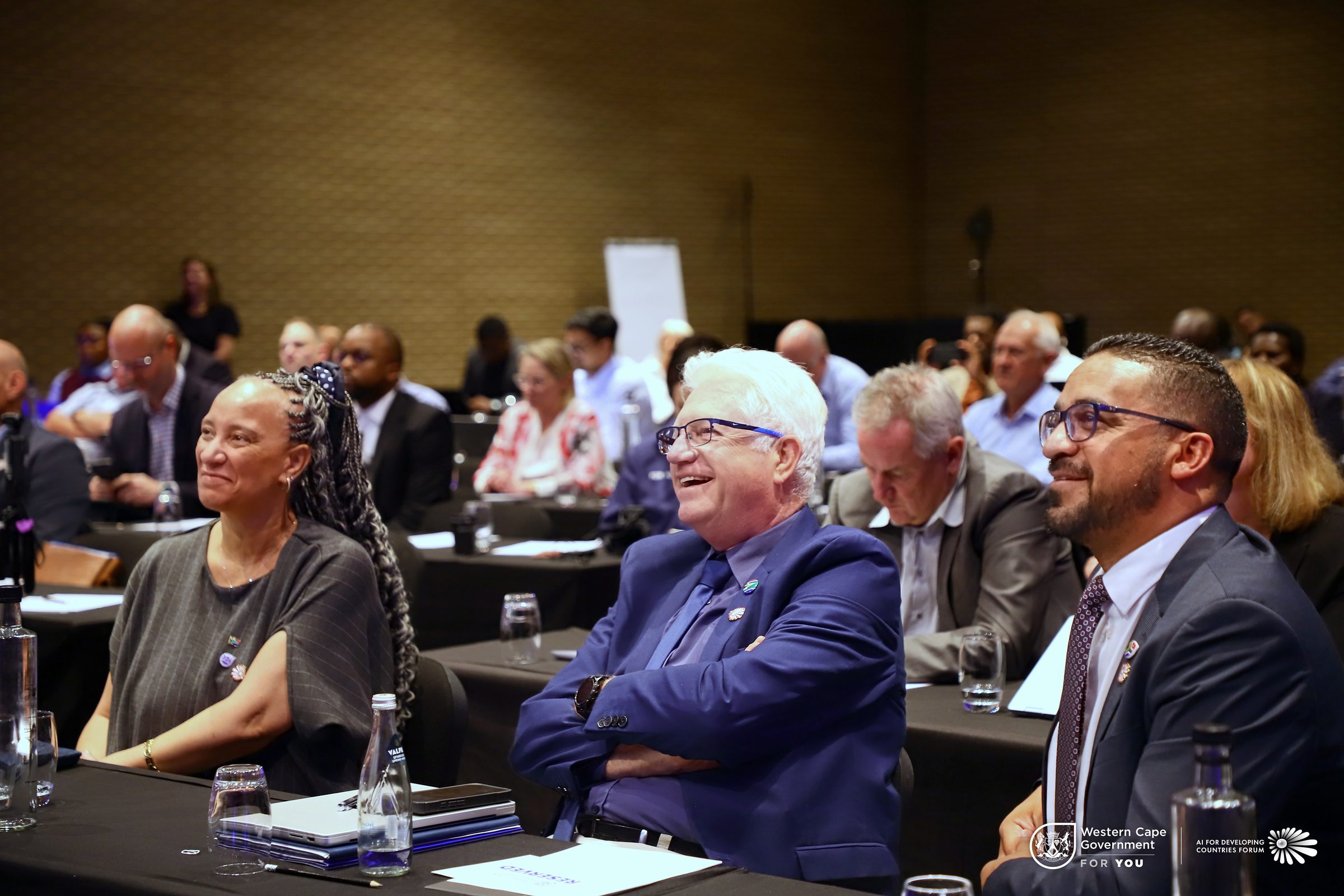
He was speaking to more than 120 people in the hall, with 308 people from 58 countries registered in person or online. The largest group, 174, came from business and civil society, including people from Standard Bank, Equinix, Cisco, Baker Hughes and Bayer, as well as data-centre, energy and software firms from across Africa, Europe and Asia.
His first subject was jobs. The provincial government’s leading priority is growth that creates employment, he said, and nothing puts food on the table or gives a person dignity like work. He gave the province’s unemployment rate as 19.4 per cent, and said 69,000 jobs had been added, 33,000 of them in construction. Skills agreements with two large technology companies, one signed the day before the Forum, had together produced about 300,000 certifications in future technologies, and the province had just renewed its long-standing partnership with the German state of Bavaria.
Infrastructure, he said, is South Africa’s Achilles heel. The country is coming out of 15 years of electricity shortages, and the Western Cape plans to enable 5,700 megawatts of new power. The province produces 58 per cent of South Africa’s agricultural exports and needs roads, rail and ports to move them. Housing is the first concern of voters. Three large new hospitals need to be delivered sooner than planned, which means attracting finance and speeding up planning. Tools such as digital twins, he said, should help government see what is coming.
The Premier argued against meeting new technology with fear. He recalled that Cape Town once required fibre-optic trenches to be dug by hand in order to protect jobs, and fell behind as a result, while the work that runs over fibre has created far more employment than trenching ever did. Globally, he said, AI is expected to create many more jobs than it displaces.
Looking ahead, he said Cape Town International Airport has 255 direct flights a week and is close to capacity, and that a new airport will need roads and rail planned with it. He described data centres as the factories of the future: the province has 14 and needs more, together with rules and standards for them.
He closed by returning to inequality. The aim, he said, is to narrow the gap that the Gini coefficient measures, and to do things faster and more efficiently.
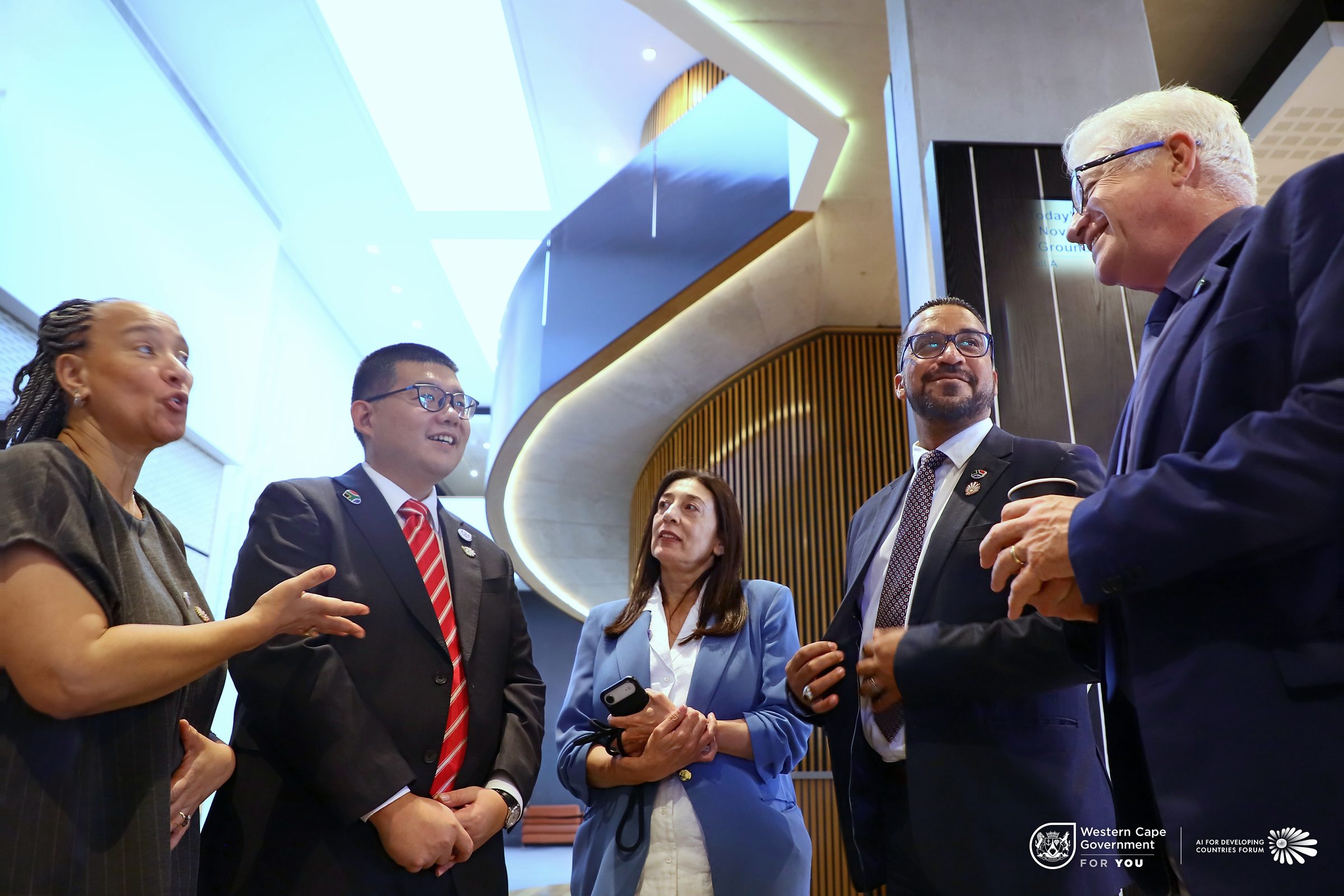
AIFOD Co-Founder Tianze Zhang, who spoke after the Premier, took up two of his figures, the 5,700 megawatts and the 58 per cent of agricultural exports, and asked the room to consider what AI could do for each.
About AIFOD. The AI for Developing Countries Forum (AIFOD) is a membership organisation working on responsible, people-centred AI for developing countries. It is in Cape Town from 15 to 20 November 2026 on the first visit under its Memorandum of Understanding with the Western Cape Government Department of Infrastructure (DOI).