How the Western Cape’s Health and Wellness Department decides where AI may be used
Since July, clinicians at four primary care sites in the Western Cape have used an AI scribe to write up more than 4,100 consultations. The clinician reads, corrects and approves every note. That, said Dr Keith Cloete on Wednesday, is the point: a person signs.
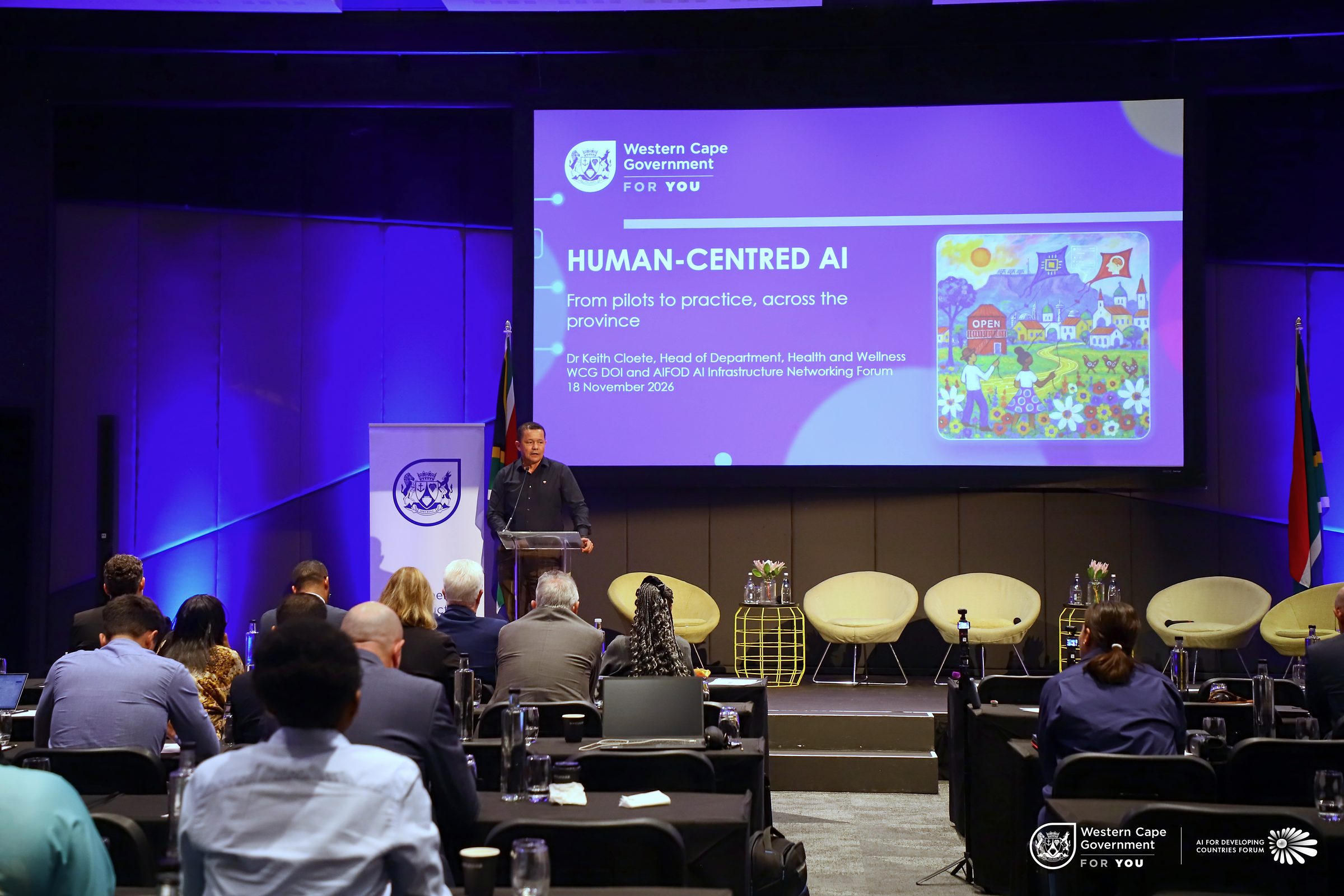
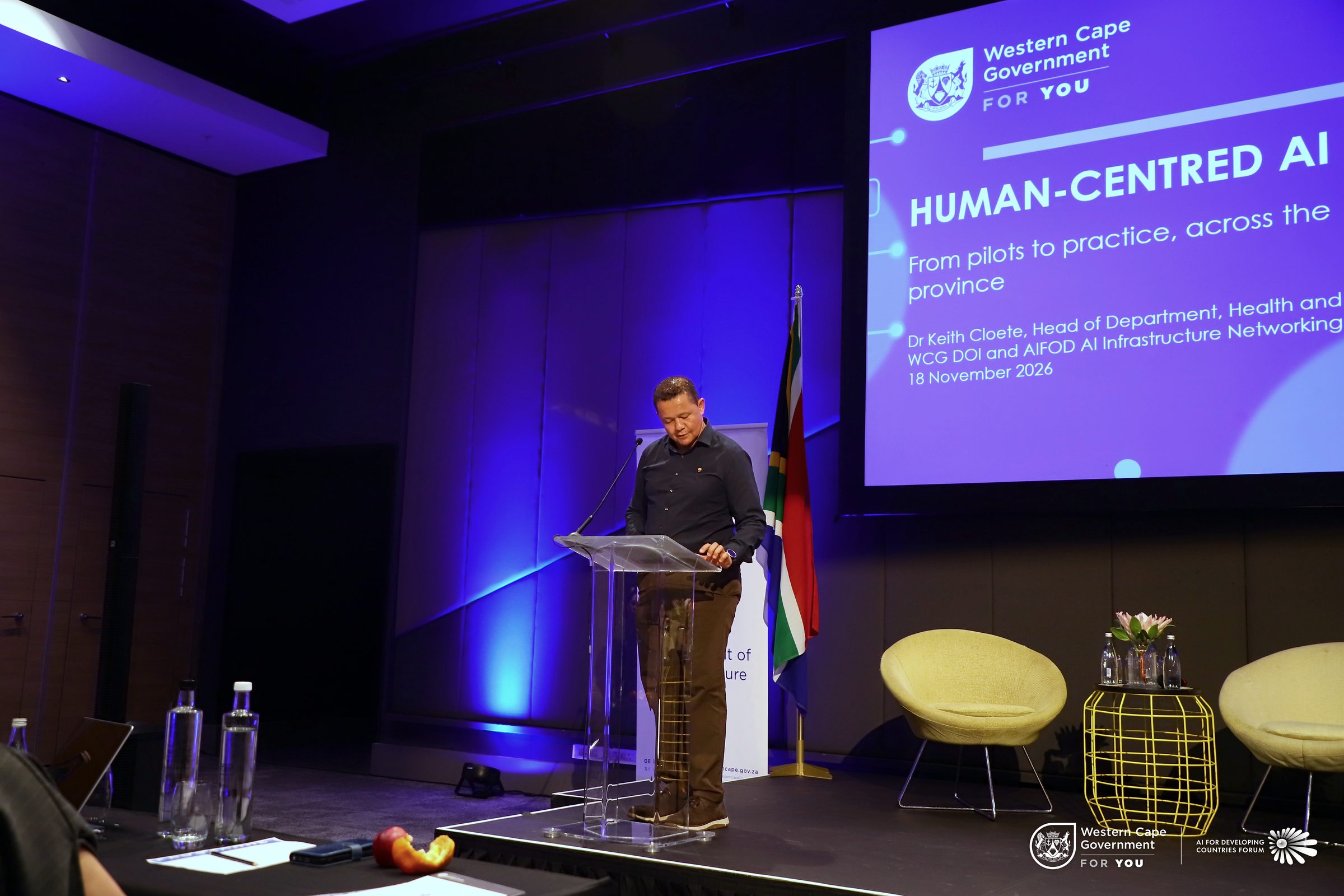
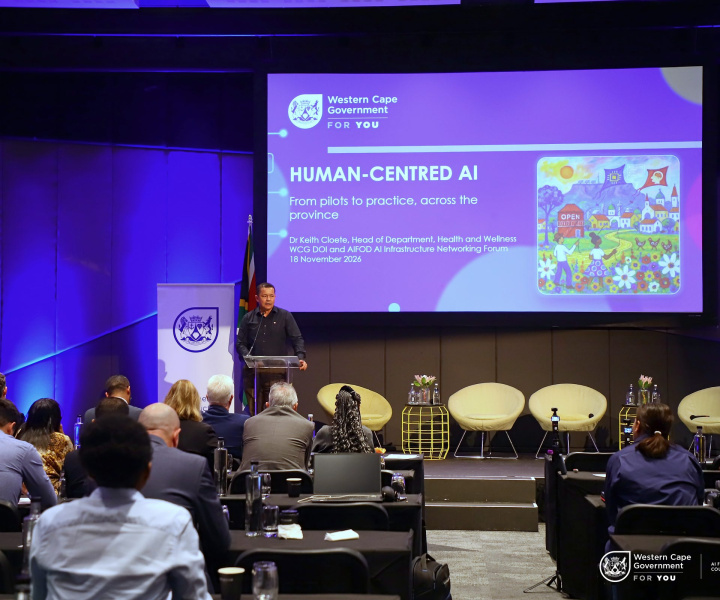
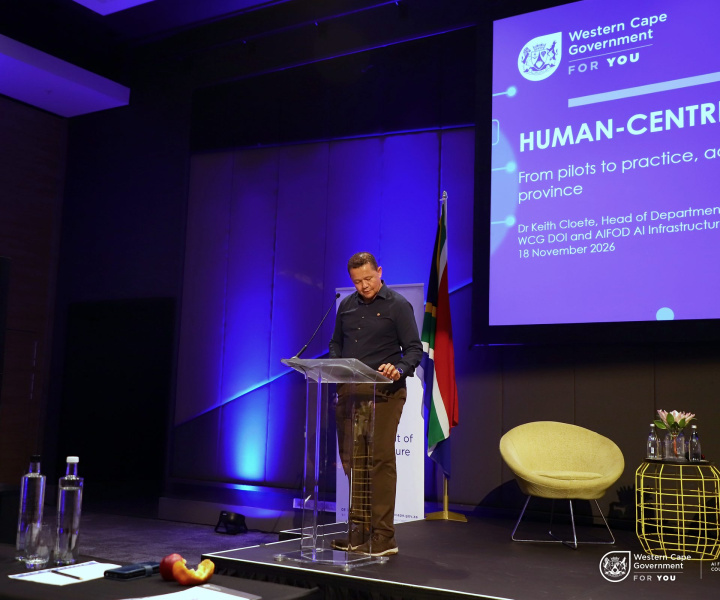
Dr Cloete, Head of the Western Cape Department of Health and Wellness, was speaking at the WCG DOI–AIFOD jointly co-hosted AI Infrastructure Ministerial Networking Forum on 18 November 2026. He defined human-centred AI as AI that is designed around people’s needs, tested with them, and kept under their control. He described AI as one more layer of infrastructure, above the natural and built environments and the digital platforms, with people and their dignity still at the top. Every tool is judged by one question: does it help residents live long, healthy, meaningful and dignified lives?
The Department sorts uses of AI on a three-step ladder, with more control at each step. On the first level, AI lightens the load: clinical notes in primary care and neurosurgery, and autopsy reports. On the second, it supports a professional’s judgment: reading CT scans for stroke, and screening for diabetic eye disease. On the third, it guides decisions about people, such as the priority given to ambulance calls, and a multidisciplinary team stands behind it.
Every idea follows the same route: intake, risk grading, trial, pilot and quality assurance, decision, and continued monitoring.
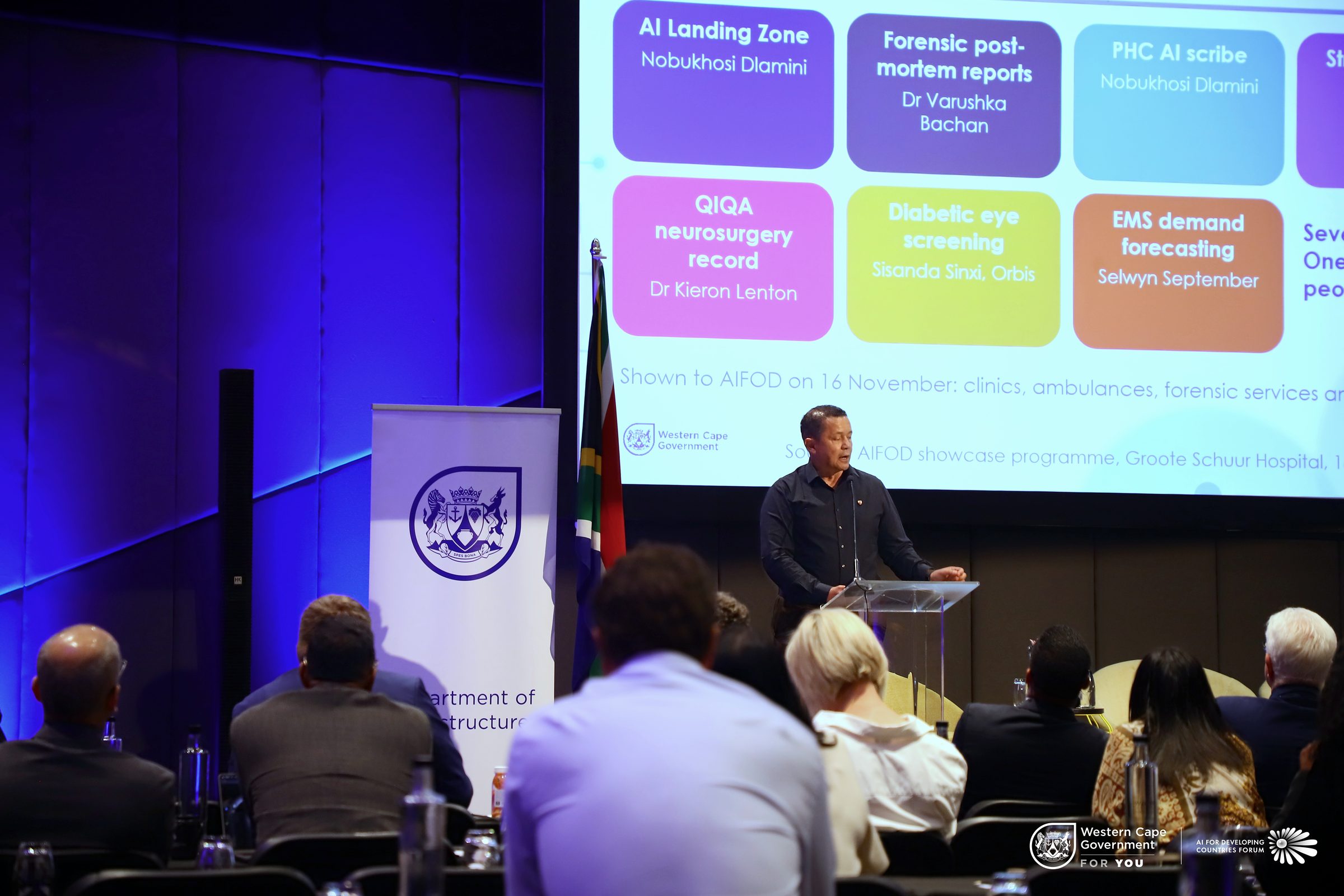
He summarised the AI projects the AIFOD delegation saw at Groote Schuur Hospital on Monday. The primary care electronic scribe adds most value in long consultations and is also used for referrals. A comparison of 49 neurosurgery cases documented by an AI scribe found its notes more accurate, with fewer errors and faster than reports written by other means. In forensic pathology, the Department is exploring the potential use of AI to support the drafting of autopsy reports, subject to the necessary technical, hosting, governance and approval requirements. Any output would remain subject to review by the forensic pathologist before the pathologist signs off. In stroke care and eye screening, AI extends the reach of specialists without replacing them. A forecasting tool helps place ambulances in advance, and a person makes the final call.
Cloete listed five lessons. The model is only one part, and connectivity and devices matter as much. A person signs and is responsible. Local languages matter a great deal. Data stays local. Evidence comes before scale. AI, he added, cannot make up for weak digital foundations; it exposes them.
He also reminded the Forum that every data centre is a decision about water, energy and heat, and that its environmental footprint affects health too. His checklist for any AI tool ends with that question, after purpose, local evidence, who decides and who is responsible, fairness, and where the data are kept.
Health is being prepared as a further area of cooperation between the Western Cape Government and AIFOD, following agriculture. The partners aim for three to five joint projects in all. On Monday the forensic pathologist leading the autopsy-report work told the delegation she hoped to show results at an AIFOD summit next year, and to share the system across South Africa and the continent.
About AIFOD. The AI for Developing Countries Forum (AIFOD) is a membership organisation working on responsible, people-centred AI for developing countries. It is in Cape Town from 15 to 20 November 2026 on the first visit under its Memorandum of Understanding with the Western Cape Government Department of Infrastructure (DOI).